Falling for a NPC

An NPC is a non-player character, as opposed to a real person (or whatever we are, playing this simulation.

They are programmed to be realistic and fulfil needs and purposes.

You might fall in love with one – is that a problem?

NO!

There are two possibilities:

  • You fell for a real being, just as you would like, all good
  • They are an NPC. which means you are just playing, and you get to play again, having learned

They Keep To Themselves

I think a way to crack any existential puzzle is to have as many disparate inputs as possible, and absorb it all. I was just watching Stranger Things and simulation theory popped into my head. Meanwhile non-player characters cannot be found out…

It is hard to believe that every NPC is totally unique, like us real people. Inadequacy in the design process, efficiencies, or simply hubris could cause them to have shared traits or commonalities.

Which would have been fine 100 years ago, but today such similarities are more easily discoverable, if the data is available.

In anticipation of the technology – not hard, it turned up in many other simulations – they may have designed the NPCs to not be very social and sharing. Possibly they hide behind a cult like Scientology (or golfers, or cyclists), hiding in plain sight, or possibly they just don’t show up on the radar.

You know how the neighbours of a terrorist thought they kept to themselves, but otherwise seemed nice enough? Maybe all violent extremists are NPCs?

What if hundreds of NPCs loved eating octopus, read every James Bond fan-fiction and never tied their shoe-laces? If they shared all of these things in the socials, or even “private” online chats, that could be discoverable. Easiest just to program them to live a quiet, mostly hidden life.

So, any friends or acquaintances who “aren’t into social media” are worthy of suspicion.

But also, some NPCs may be placed here as a catalyst, like Shakespeare or Darwin. And they seek attention absolutely.

Real players are likely in-between. And would be the only people to read this.
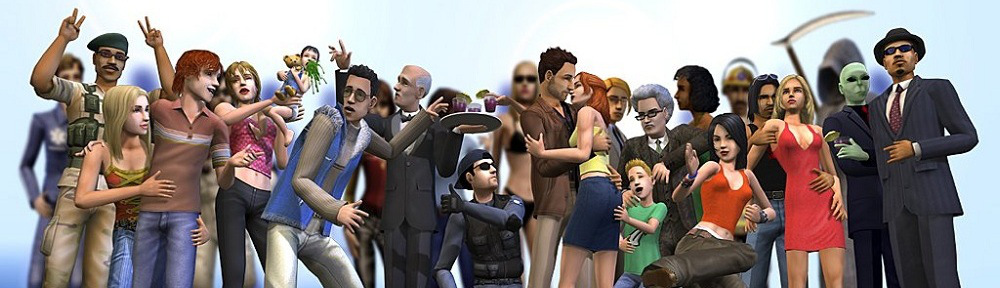
A Simulation Without Aliens

Many people figure that the universe is so vast and old, it makes no sense that aliens haven’t stopped by to say hello.

What if, in the real world, aliens did turn up, and everything changed in unimaginable ways good or bad?

What if the aliens created a simulation to see what would’ve become of humans if the aliens never interfered?

If they were advanced enough to make it to Earth, they are perhaps advanced enough to build such a simulation.

Start the simulation prior to alien contact, and simply remove aliens from the simulation. Let the solar system be navigable, but beyond that is just lights in the sky and not an actual whole universe in the simulation.

Which means “we” can never see proof of aliens out there, or on Earth, because in our simulation they don’t exist!


DILF

I’ve been visiting/looking after my kids, part of a random shared parenting arrangement.

Driving through the resort, the kids point out a guy – standing next to his $180K ute – who their Mum says is a DILF. And he looks it.

Thing is, most of the time in and out out of the resort – Daddy Uber – he is in the same spot doing the same thing. Instead of like, working.

I mention The Truman Show to the kids and they were made to watch it at school!

I might drive in and out a few more times than normal, to check. But of course in a simulation they will know I typed this

Timeliness

This is a very unusual and perhaps unique thought – the simulation might conspire to make things happen in a timely manner.

Context: I regularly make a 90 minute drive. Typically I listen to the radio and when a song bores me, I start a CD. Not a CD I know well, but a CD randomly pulled from a box of CDs I have not listened tp in decades.

I haven’t looked at track listing, and have no idea of how long the album plays for. Although, obviously, it will be within a range of like 30 mins to 80 mins.

So I listen the the album and – I think 5 times now from 30 journeys – when I arrive home and park, the moment I pull the parking brake the last track finishes precisely then.

Uncanny and no way I can cause it to happen.

Last weekend I attended an expo which had lots of talks. The first we wanted to attend was at noon. Google Maps said it was a 3 hour drive so I allowed 4 hours. I went to pick up my girlfriend at 8 but she was 12 minutes late. Our journey included a detour to see a town (but couldn’t find it), and 20 minutes of a wrong turn and backtracking, and a fuel and coffee stop. By the time we dealt with the queue to get in, and the parking, and finding the tent, we sat down to watch the talk. And the moment we sat down my watch ticked over from 11:59 to 12:00.

I’m not intending to convince anyone, just showing where I am coming from.

If we live in a Truman Show existence, then maybe the system contrives to make us turn up at the right time, by putting obstacles in our path, or whatever.

Something to try and notice.

Diamonds & Salmon

The nicest things from nature cost the most!

No, of course not, flowers are wonderful and grow for free. 

Some of the nicest things from nature cost the most!

Diamonds are rare. Muck is common. Do we like diamonds because they are rare, and that is the only reason? Would we like muck if it was rare, and pay $50K per kilo?

It is complicated!

My guess is that truffles and caviar are seen as delicious because they are expensive. And we know things like salt used to be very expensive.

But you don’t need many tweaks to gamify a world. Often just one thing that we are told to desire will suffice. In games like Fortnite it is outfits. My kids have had hundreds of outfits but desire the expensive ones they don’t have, that to my eye are no different. And makes the developers hundreds of millions.

Maybe diamonds are intended to be the goal in our simulation. Regardless of how things actually turn out, our world is different to other simulations by only three factors:

  • diamonds exist naturally
  • they are rare and hard to attain
  • we think they look amazing

Someone from another simulation will think they look like a pebble.

So maybe there is a single thing that this world has unique, to randomise the outcome. It doesn’t have to be what we end up desiring for all time, but most likely will be at least for part of our evolution and history.

It could be anything we have ever fought over, like salt and gold. Or it could be something that is really similar to cheaper versions, but we prefer the expensive one, like salmon.


Conspiracy Theorists are Not Real People?

If we lived in a simulation, and most of us humans are non-player characters (NPCs, how can we spot who are real and who are not?

I have often considered certain groups, because they are oddly similar and I’ve never known one in real life, or even spoken to one socially:

  • pack cyclists
  • bus drivers
  • osteopaths

Here’s a new idea – conspiracy theorists. Maybe something in their programming is glitching, combined with some need to belong to a group. Maybe such things spread only amongst NPCs?

So if someone thinks everything is a conspiracy – the war in Ukraine, floods in Australia, elections in the US – maybe it is a programming glitch and they are not real people?

Easter Egg at the Bottom of the Ocean?

So imagine if our creators decided that a certain level of technological advancement was required before we could discover that we are not actually real.

That could look like a symbol, sign or something clearly un-natural:

  • on something very small (requiring advanced magnification)
  • on something out in space
  • at the bottom of the ocean (which we still find very hard to get to, and dark!)

And it could be in multitudes, or just one instance, the latter meaning we would need to be full scanning and mapping and analysing everything.

Scanning sea-floors could be great for archaeology as well, given that a lot of land has been submerged since we became a modern species. Telling the difference between what was made by us, or our creators would be hard, so I only expect such an Easter Egg to be at the bottom of the deepest parts of our oceans.

They could make it doubly tricky, like only somewhere remote, and you need to use a scanning electron microscope to see it…

Tardigrades and Quantum Entanglement

I’ve had two opinions around quantum entanglement:

Simulation: An algorithm decides how small something should be to show it, depending on whether someone is watching or not. Just like how a video game doesn’t render anything off-screen, because there is no point and it wastes processing power.

Non-simulation: I always though it was a factor of size and being an object made from a single element.

Turns out a creature can be observed in a quantum entangled state:

In the experiment, researchers placed a tardigrade tun on a superconducting qubit and observed coupling between the qubit and the tardigrade tun via a shift in the resonance frequency of the new qubit-tardigrade system. They then entangled this joint qubit-tardigrade
system with a second superconducting qubit.
https://www.dailygrail.com/2021/12/quantum-tardigrade-scientists-observe-quantum-entanglement-in-a-multicellular-living-creature-for-the-first-time/

So, I consider this to be a strong indicator of us in a simulation, unless some scientists can explain it.

The Matrix: A Reason for Our Simulation?

The Matrix, the movie, had a profound affect on our society. It changed action movies, it gave us catchphrases and icons, it showed that high concept, hard-to-get-your-head-around movies can be blockbusters. And it inspired us to question our reality.

Fast forward 20 years and we have a world that is questioning science and reality, disturbingly so. Just like the moon/eclipses may have been planted to inspire religion, The Matrix may have been planted to inspire doubt.

Imagine if the world of The Matrix is a reality, and we are a simulation. Imagine if what transpired in The Matrix really happened, and our reality is a simulation that looks at how the ideas presented in that movie might affect the decades beyond, for all those who watched it.

Donald Trump is telling us that everything is a lie.

More and more we are choosing to live in video games and virtual worlds.